Our Services
Two pillars. We keep your operations running and we defend them against attacks.
inducio is a managed services provider (MSP) from Traunstein. We run networks, servers and security around the clock, as managed services with clear responsibilities instead of ad-hoc support.
inducio does two things. The first is running your IT and network infrastructure. The second is detecting and defending against attacks on exactly that infrastructure. There are two units for this. The Network Operations Center (NOC) and the Security Operations Center (SOC). Every other service belongs to one of the two.
This separation is not a formality. It answers the question of who does what during an incident. If a switch fails, that is an operations matter and the responsibility of the NOC. If an endpoint reports suspicious behaviour, that is a security matter and the responsibility of the SOC.
The split follows purpose and not technology. The firewall is the best example of this. We set it up, maintain its rule set and keep it up to date. That is continuous operation and therefore belongs to the NOC. If we detect an attack on or behind that firewall, the SOC takes over.
We work independently of manufacturers and are based in Traunstein. Our customers include KRITIS operators (operators of critical infrastructure), municipal utilities, hospitals, industry and mechanical engineering as well as mid-sized manufacturers. In other words, wherever a standstill costs money immediately.
For companies in Traunstein, the Chiemgau, Rosenheim and south-east Bavaria we have summarised on the page IT service provider in Traunstein what working with us on site looks like.
What we do for individual sectors is shown on the pages IT for hospitals and IT for municipal utilities in detail.
Keeping operations running, the NOC
We run and monitor your infrastructure from a single source, around the clock. You do not need to maintain a team of your own for this.
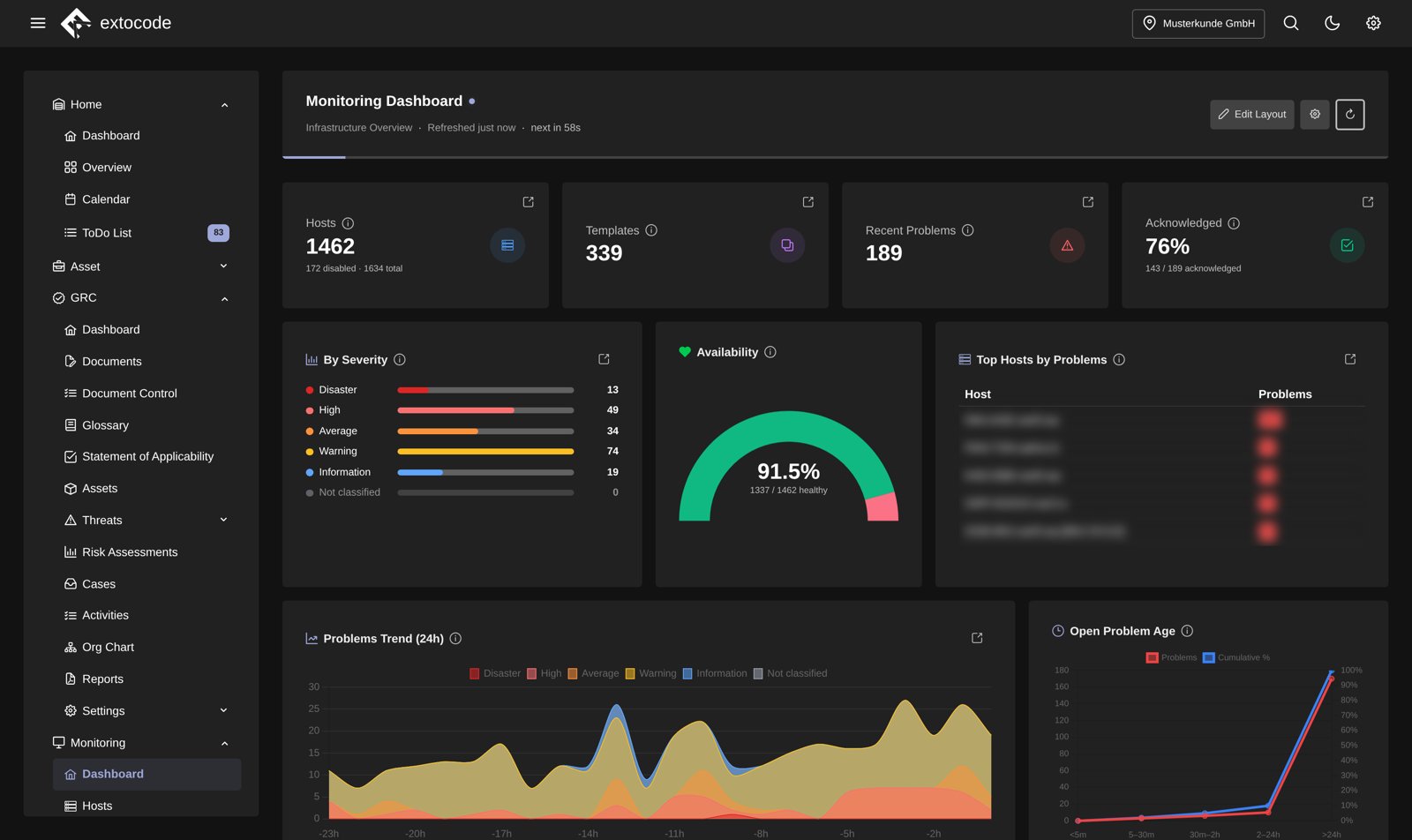
Every outage costs revenue, nerves and trust. Very few companies can afford a team that keeps watch day and night. Our Network Operations Center closes exactly this gap. We connect your systems to our monitoring, detect faults early and intervene before they turn into a standstill. Often you will not notice a fault at all, because it has already been resolved.
Operations means more than watching. The NOC therefore also covers the work that keeps an infrastructure stable in the first place. This includes rule set maintenance, patching, software distribution and well-maintained documentation.
These building blocks belong to the NOC:
- Monitoring: We continuously monitor network hardware, servers and your critical services, and raise an alarm as soon as something falls outside the expected range.
- Firewall service: We operate your firewall, maintain the rule set, install updates and connect your sites via VPN. On request also as Firewall-as-a-Service from our data centre.
- Network and automation service: We plan, build and support LAN, WAN and WLAN, including the configuration of the active components.
- Endpoint Management: We manage PCs, servers, smartphones and tablets centrally based on baramundi and distribute software and updates automatically.
- Documentation: We document your infrastructure in a structured way and keep it up to date whenever something changes. This saves time during a fault and provides the evidence required for audits.
- 24/7 support: Help with IT faults, at night and at weekends as well. In addition, access to specialist knowledge for complex systems and specialised applications.
- Onboarding, the route into the NOC: New infrastructure, a migration or Modern Workplace. We support the project from analysis through design to handover into live operation.
All building blocks are described in detail on the page Network Operations Center (NOC).
Detecting and defending against attacks, the SOC
We monitor your systems continuously for attacks and respond according to clearly defined procedures. You do not need to build up a security team of your own for this.
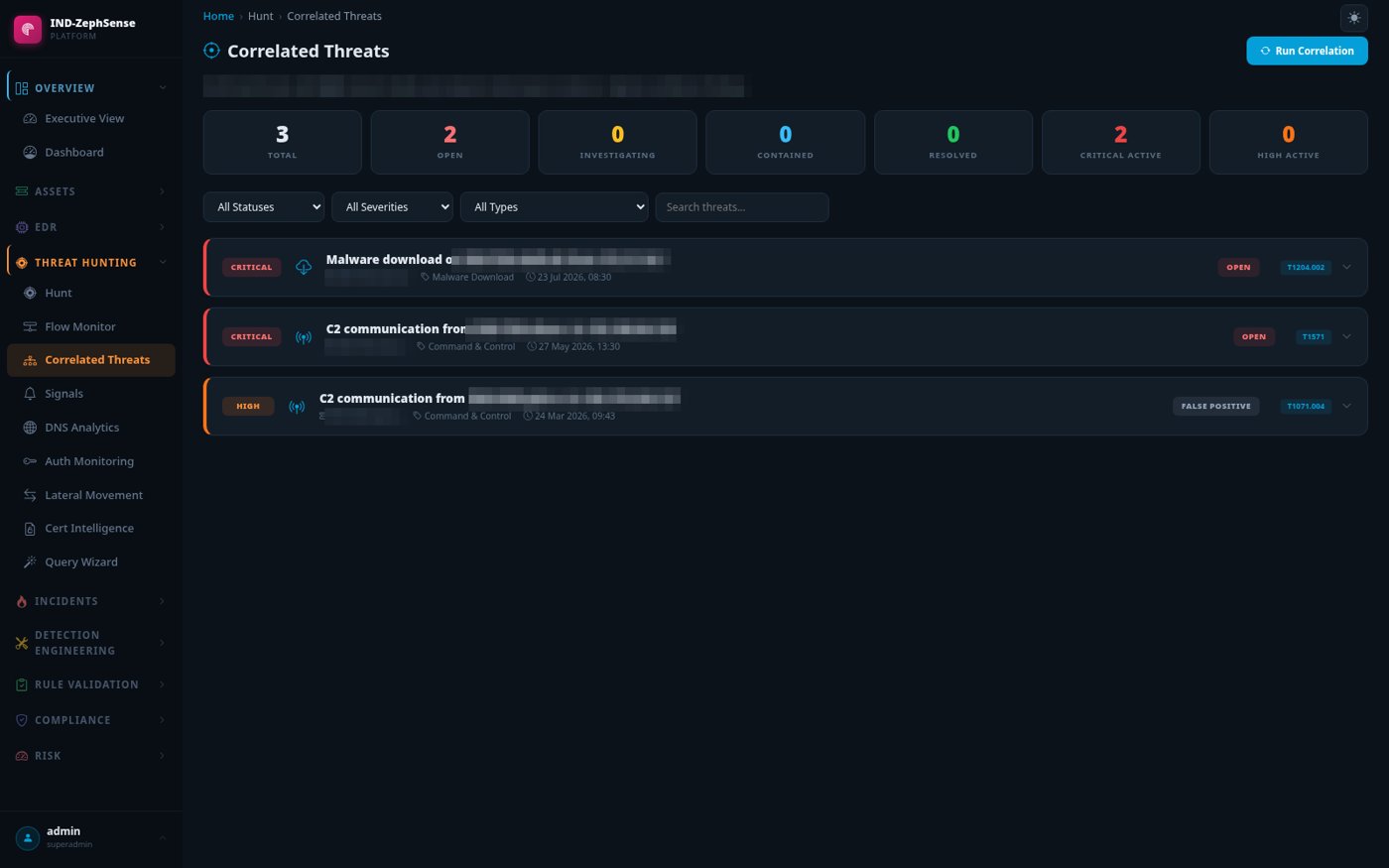
Cyber attacks are quiet. By the time something is noticed, the damage has often already been done. Checking once a year is therefore not enough. Our Security Operations Center observes your IT and OT infrastructure continuously, assesses security events and initiates countermeasures. The decision on what happens is ultimately taken by a person and not by a rule set alone.
The SOC also looks at your own vulnerabilities. A long list of open items helps nobody. What matters is what needs to be closed first.
These building blocks belong to the SOC:
- Threat detection and response: We detect anomalies and potential attacks in your IT and OT infrastructure, assess them continuously and respond according to established procedures.
- Endpoint Protection: Virus protection on all endpoints, currently G DATA, plus Endpoint Detection and Response. The endpoint is the most common point of entry, which is why it is kept under particular observation.
- Vulnerability Assessment (VAS): We look at your vulnerabilities from the network perspective and prioritise them by the likelihood that a gap will actually be exploited. It is not the length of the list that decides.
Behind this are two platforms that we bring with us and operate. ZephSense carries detection and response, the Central Operations Dashboard carries the assessment of vulnerabilities. You do not have to buy either of them and you do not have to operate them. Which platforms these are is set out under The platforms on the SOC page.
A word on the two endpoint topics, because the names are similar. Endpoint Protection protects the device against threats and therefore belongs to the SOC. Endpoint Management distributes software, maintains updates and manages the device. That is operations and belongs to the NOC.
All building blocks are described in detail on the page Security Operations Center (SOC).
Two areas sit alongside the pillars. For many of our customers they are still part of the picture.
Critical infrastructures
KRITIS operators receive both pillars and, in addition, the evidence required by the supervisory authority.
Critical infrastructure is not a service in its own right, it is a set of requirements. Anyone who falls under it carries particular obligations and a high level of risk. IT-Sicherheitsgesetz 2.0 (German IT Security Act 2.0), KRITIS, NIS 2 and ISO 27001 all place requirements on the same operation. We implement availability, attack detection and compliance in a way that fits together.
We implement and operate attack detection systems (Systeme zur Angriffserkennung, SzA) in line with BSI requirements, among other things with ZephSense. In an audit, what counts in the end is the evidence. This is supplied by the continuously maintained Documentation from operations. For the legal side we work together with iusGard, a law firm specialising in data protection and IT law. This helps wherever data protection, IT security and contracts interact.
The page IT for critical infrastructures (KRITIS) covers this in detail.
Central Operations Dashboard (COD)
The COD brings together systems from different manufacturers in a single interface.
The more systems and manufacturers are in use, the more isolated solutions, duplicated data maintenance and blind spots arise. The Central Operations Dashboard creates a single view of your IT and OT infrastructure. Firewalls, switches and hypervisors from different manufacturers come together there. It runs in your own data centre. There is no obligation to use the cloud.
The COD is a product of extocode GmbH. We use it as the platform for two of our services. It carries Monitoring in operations and Vulnerability Assessment in security.
The page Central Operations Dashboard (COD) shows the modules of the platform.
How we work
You have one central point of contact, whether the matter comes from operations or from security.
The procedure is the same for all services. First we record your requirements and your protection needs. Then we connect your systems to our monitoring. From that point operations run, around the clock and seven days a week.
We agree response times in advance. They depend on the protection needs of the systems concerned. Evaluations and reports show you the state of your infrastructure. Every incident is documented so that it can be traced. This means that in a serious case you can prove what happened when and what we did.
Not sure what you need?
Tell us your concern, we will assign it to the right pillar.
You do not have to decide in advance whether your topic belongs to the NOC or to the SOC. Describe what is on your mind. We will tell you which building blocks are needed for it and which are not.